
Introduction
There was a time when building a website was a technical requirement.
Today, businesses are no longer buying technical solutions. They are buying systems.
This shift started quietly. But its impact is large enough to reshape the entire industry.
Because today the core issue is no longer
- writing code - building pages - adding animations - or even looking modern
The real issue is
- acquiring customers - building trust - increasing conversions - surviving digitally - reducing operational chaos - creating sustainable systems
This is why the web design industry is no longer just a production industry. It is becoming:
- a decision industry - a conversion industry - a digital infrastructure industry
This guide was built using large-scale field analysis across the USA, Canada, and Australia.
Research sources include:
- Reddit communities - Webflow / Framer / Wix ecosystems - LinkedIn industry discussions - agency pricing structures - freelancer communities - creator economy trends - SaaS ecosystem shifts - Quora discussions - AI and no-code reports - real customer complaint patterns
The goal of this report is simple: To answer the question “Where is the website industry actually going?” using real market behavior instead of surface-level assumptions.
---
Chapter 1 – Is the Website Industry Really Dying?
Short answer: No.
But its old structure is collapsing.
The market is changing—not because website creation became harder, but because it became easier.
Years ago, building a website required the following:
- coding skills - technical infrastructure knowledge - responsive systems - hosting management - backend understanding
Today:
- AI builders - no-code systems - drag-and-drop platforms - premium templates - AI-generated content
… have commoditized production.
Production itself is losing value. But that does not mean the industry is disappearing. It means the value center is moving.
---
Chapter 2 – Is the Developer Still Just a Developer?
This is where the biggest transformation is happening.
Businesses are no longer saying “Build me a website.”
Instead, they are saying
- Bring me customers - Generate leads - Improve visibility - Increase conversions - Position my business correctly online
This is why the traditional developer role is rapidly evolving into the following:
Growth Partner Someone who helps drive digital business growth.
Lead Specialist Someone who builds customer acquisition systems.
Conversion-Focused Builder Someone who creates websites that produce action.
Niche Operator Someone specialized in specific industries.
Automation Helper Someone who connects websites with CRM, booking, payments, and operations.
This shift changes everything. Because clients now care less about “What platform did you use?” and more about “What will this do for my business?”
- Higher client retention, premium pricing, recurring revenue
- Requires business & psychology knowledge, not just code.
---
Chapter 3 – How Client Demand Changed
Before 2020, website demand focused on:
- modern design - premium visuals - animations - corporate appearance - custom aesthetics
By 2026, priorities shifted toward the following:
- speed - simplicity - mobile performance - Google visibility - booking systems - lead generation - trust - low maintenance - sustainability
For many businesses today: A website is no longer a digital brochure. It is a sales infrastructure.
---
Chapter 4 – The Rise of the “My Friend Can Build It” Era
One of the biggest psychological shifts in the industry came from this belief: “Websites are easy now.”
And to a certain level, that is true.
Tools like:
- Wix AI - Framer AI - Webflow templates - ChatGPT-assisted content - AI layout systems
… allow non-technical users to create visually impressive websites.
As a result:
- prices dropped - technical production lost exclusivity - generic work became commoditized
But another problem appeared.
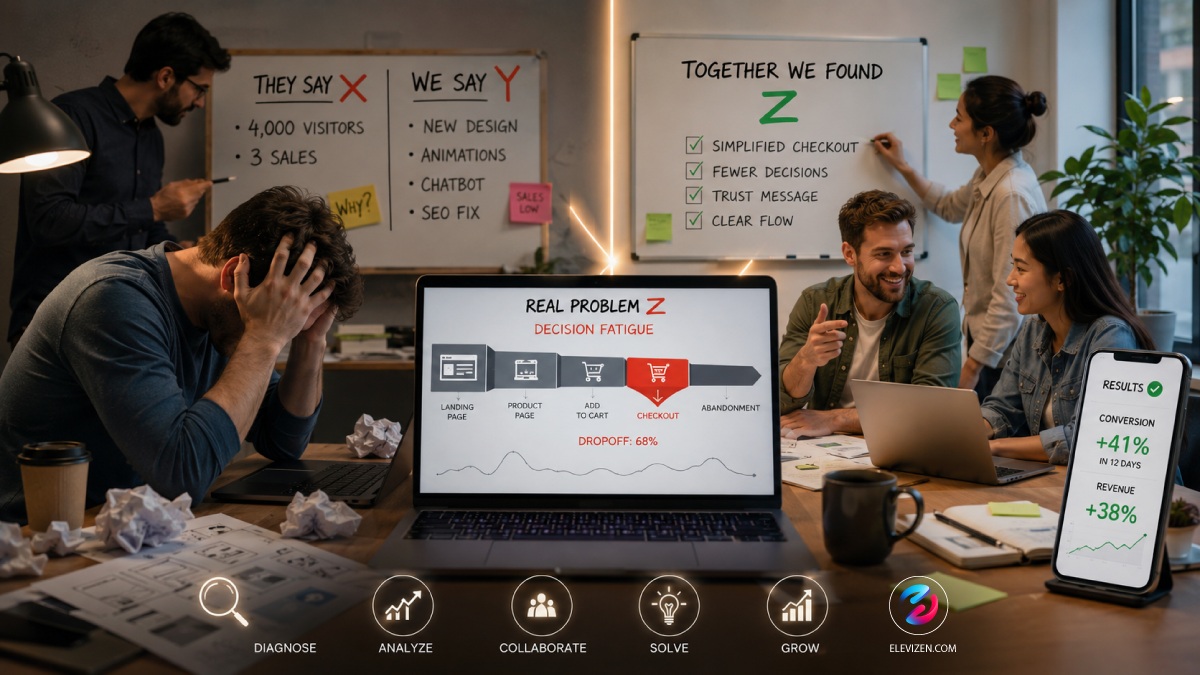
Businesses started ending up with “Good-looking websites that do not work.”
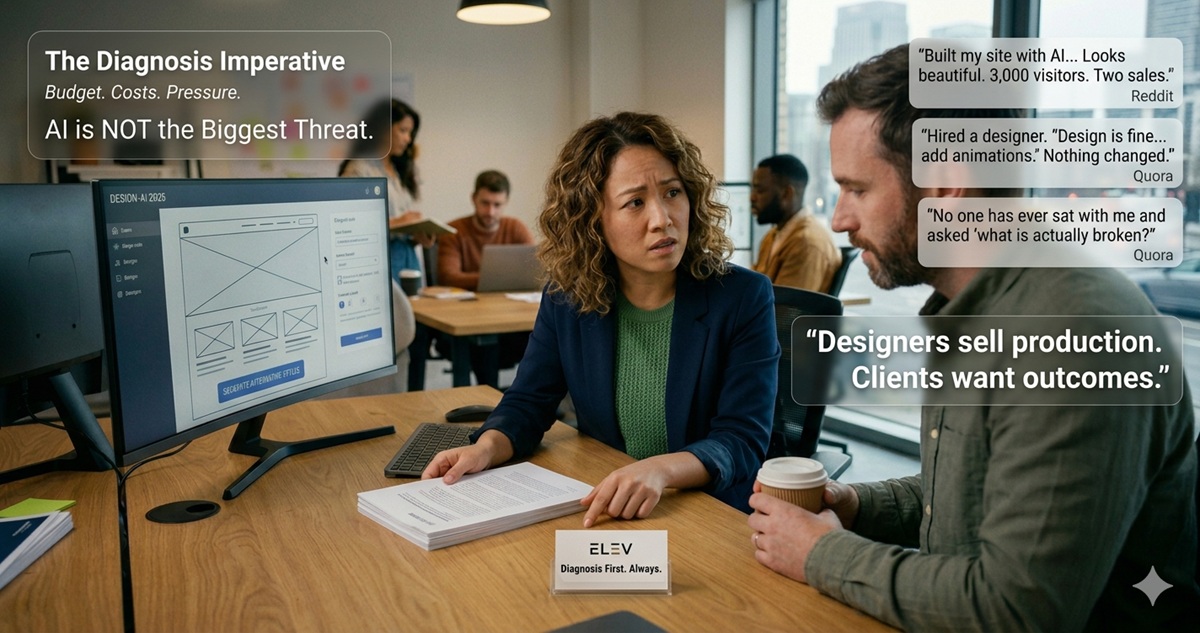
The problem is no longer production. The problem is decision quality.
If you can build a website in 2 hours, your real value is not in building—it's in deciding what to build and why.
---
Chapter 5 – The Market Split Into 3 Layers
#### 1. Commodity Layer ($300–1500)
Includes:
- Fiverr workers - students - AI-template operators - ultra-cheap freelancers
This segment is dominated by:
- intense competition - low loyalty - low sustainability - price-focused buying behavior
#### 2. Strategic Professional Layer ($2k–15k)
This is where the real battle is happening.
Clients here are buying outcomes, not websites.
The strongest operators in this layer are:
- niche experts - conversion-focused builders - SEO + CRO specialists - process-driven operators - trust-builders
📌 This is currently the strongest growth area in the industry.
#### 3. Infrastructure & System Layer ($20k–150k+)
At this level, websites are no longer the main product.
What businesses are actually buying:
- infrastructure - automation - CRM systems - customer journeys - operational integration - growth systems
Technical production becomes secondary. Strategy becomes primary.
---
Chapter 6 – Who Really Controls Pricing?
Many people still believe large agencies control the market.
But today, pricing psychology is shaped more by:
- AI builders - template ecosystems - subscription freelancers - no-code operators - TikTok and YouTube creators - Fiverr and Upwork
The perception that “building websites is easy now” continues pushing prices downward.
This means technical skill alone is no longer enough to justify premium pricing.
---
Chapter 7 – Why Subscription Models Are Exploding
Especially in the U.S., the last two years created a major shift.
The old model:
- large upfront payment - project delivery - relationship ends
The new model:
- low starting cost - monthly recurring payment - hosting + maintenance + edits - long-term relationship
Why? Businesses no longer want massive upfront risk. Freelancers no longer want unpredictable one-time income.
This is why “$0 down monthly websites” are growing aggressively.
---
Chapter 8 – Is AI Destroying the Industry?
No. But it is destroying average production work.
AI heavily impacts:
- generic production - low-strategy projects - template assembly - basic copywriting - standard landing pages
But AI still struggles with:
- business diagnosis - positioning - trust building - customer psychology - niche communication - conversion thinking
> The future value of the industry is shifting from production* toward *thinking.
---
Chapter 9 – The Biggest Fears Clients Have
Field research repeatedly shows the same fears:
- “The freelancer may disappear.” - “I may waste money.” - “The website may look good but fail.” - “I may need another redesign soon.” - “Agencies may overcharge me.” - “Cheap work may damage my reputation.”
This is why trust has become the strongest sales factor in the web industry.
---
Chapter 10 – Who Will Survive?
The future winners:
- niche experts - conversion-focused thinkers - business-first operators - system builders - recurring revenue operators - automation specialists - AI-assisted strategists
The future losers:
- generic designers - template copy operators - purely technical developers - low-strategy freelancers
---
Chapter 11 – What Will the Future Web Operator Look Like?
The industry is slowly shifting away from the following:
- pure designers - pure coders
… and toward business infrastructure operators.
Because the future is not about building websites. It is about operating digital business systems.
The strongest future operators will understand:
- niche psychology - positioning - customer behavior - business models - conversion systems - AI-assisted workflows
---
Chapter 12 – Final Conclusion
The website industry is not dying. But it is changing form.
In the past, value came from production.
Today, value comes from:
- decision quality - trust building - conversion thinking - business understanding - system creation
Most people are still focused on “building websites.” But the market increasingly rewards people who understand why businesses fail digitally.
The future winners will not simply build websites. They will understand how digital decisions shape business survival.
---
Join Leading Growth Strategists
The same conversion tactics we use for our premium clients, delivered to your inbox every Friday. Zero noise. All data.
Is your current architecture costing you conversions?
Is your current architecture costing you conversions?
Expand Your Authority
One ecosystem, infinite growth. Bridge your expertise into our specialized platforms designed to scale every facet of your digital empire.
CREAIZEN
Bespoke digital architecture for high-ticket service providers.
ORIGINIZEN
Deep-authority training and frameworks for the 1% of creators.
USEFULIO
The curated tech stack and partnership engine for scale.
VIRALICH
Flash-point launches and viral content training for maximum reach.
Community Discussion
0 Registered Opinions
What niche problem can we solve next?
We don't just write articles; we build protocols for elite operators. Tell us exactly where your scaling is stalling, and we'll engineer the next release around it.